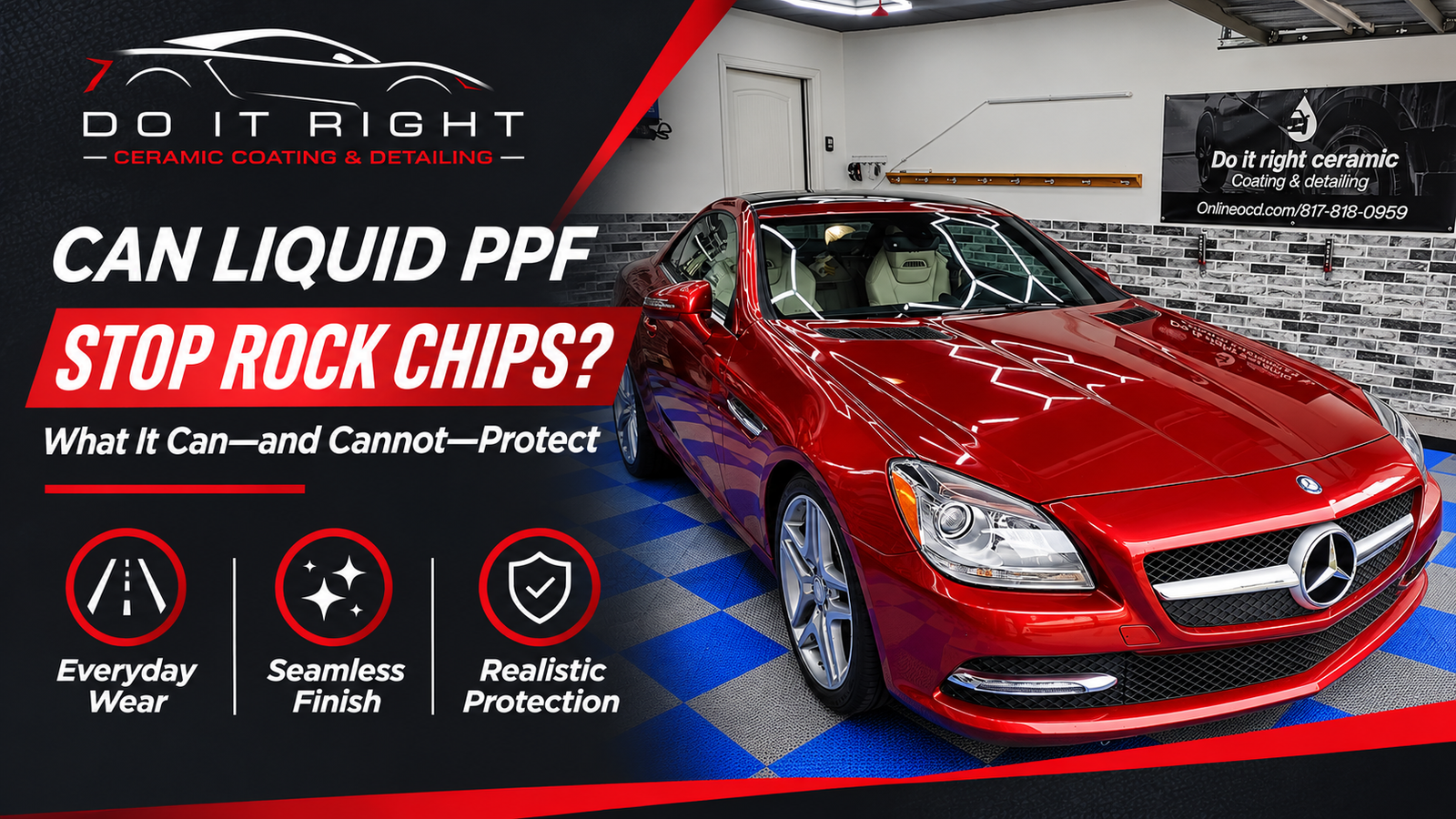
Rock chips are one of the most frustrating types of paint damage. A small stone kicked up by another vehicle can strike your hood, bumper, or fender and leave a noticeable mark in seconds.
Even careful drivers can’t avoid every piece of road debris.
That’s why many vehicle owners are exploring Liquid PPF (Liquid Paint Protection Film) as a way to protect their paint without applying traditional adhesive-backed film.
But an important question remains: Can Liquid PPF actually stop rock chips?
The short answer is that certain Liquid PPF products are designed to provide additional resistance against light impacts and everyday road wear. However, their ability to prevent rock chips depends on the formulation, applied thickness, and impact conditions.
Liquid PPF should not automatically be considered equivalent to traditional paint protection film.
Let’s explore how it works, what protection you can realistically expect, and whether it’s suitable for your vehicle.
What Is Liquid PPF?
Liquid PPF, or Liquid Paint Protection Film, is a liquid-applied protective product that cures into a coating or film-like layer over a vehicle’s painted surfaces.
Unlike traditional PPF, which is manufactured as a flexible sheet and installed using an adhesive, Liquid PPF is applied directly to prepared paint.
Depending on the product, application may involve specialized wiping, leveling, or spraying techniques.
What Are the Main Benefits of Liquid PPF?
Product-specific benefits may include:
- An additional protective layer over automotive paint
- Resistance to certain light scratches and surface abrasions
- Enhanced paint gloss and visual depth
- A smooth, seamless appearance
- Improved resistance to some environmental contaminants
- Easier routine cleaning
- Additional protection against everyday paint wear
Some formulations also offer self-healing characteristics, although this feature should be verified for the specific product.
Because Liquid PPF is an emerging product category, not every formulation provides the same capabilities.
Can Liquid PPF Really Prevent Rock Chips?
Liquid PPF may help reduce damage from some light road impacts, but it cannot guarantee protection against rock chips.
Its effectiveness depends on several factors:
- The composition of the protective product
- The thickness of the cured layer
- Proper surface preparation and application
- The size and shape of the road debris
- The speed and angle of impact
- The condition of the paint underneath
A small particle striking the paint at a relatively low speed creates different conditions from a sharp stone traveling at highway speeds.
Some Liquid PPF manufacturers advertise light impact resistance. However, claims about rock-chip protection should be supported by testing for the exact product being installed.
If preventing rock chips is your highest priority, traditional sheet PPF generally has the more established impact-protection record.
How Does Liquid PPF Protect Automotive Paint?
Liquid PPF creates an additional layer between your vehicle’s finish and the outside environment.
Depending on the formulation, the cured material may provide some flexibility, surface durability, and resistance to everyday contact.
1. Protection Against Light Surface Abrasions
Washing, dust, and everyday contact can contribute to fine marks on automotive paint.
Certain Liquid PPF systems are designed to reduce the effects of light abrasions.
However, no protective coating eliminates all scratches.
2. Resistance to Environmental Contaminants
Your vehicle regularly encounters:
- Road grime
- Bug residue
- Bird droppings
- Dust and dirt
- Rainwater contaminants
- Other environmental buildup
Some Liquid PPF products create surfaces that are easier to clean, helping reduce prolonged contact with contaminants.
3. Enhanced Gloss and Appearance
Liquid-applied protection can enhance the depth and appearance of a well-prepared painted surface.
Because there are no prefabricated sheet edges, the finish can have a continuous appearance across treated panels.
4. Additional Resistance to Minor Road Wear
Certain formulations may provide additional resistance to light impacts and abrasions.
The level of resistance varies considerably, making it important to understand the actual product specifications before selecting a package.
Liquid PPF vs. Traditional PPF: Which Protects Better Against Rock Chips?
Although their names sound similar, Liquid PPF and traditional paint protection film are different products.
Traditional PPF is typically a flexible polyurethane-based sheet engineered to absorb and distribute impact energy.
Liquid PPF is applied wet and cures directly on the paint. Its protective properties depend on its chemistry and final thickness.
| Feature | Liquid PPF | Traditional PPF |
|---|---|---|
| Application | Applied as a liquid | Installed as a manufactured sheet |
| Appearance | Seamless, without sheet cut lines | Nearly invisible when properly installed |
| Rock-chip resistance | Product-dependent; generally less established | Designed specifically for impact protection |
| Light scratch resistance | Varies by formulation | Commonly offers abrasion resistance |
| Self-healing properties | Available on some products | Available on many premium films |
| Coverage | Can provide continuous coverage on suitable surfaces | Applied to selected panels or the full vehicle |
| Thickness | Varies by product and application | Generally much thicker |
| Removal or repair | Depends on the product | Often removable by a qualified professional |
| Best suited for | Owners seeking seamless paint protection and surface durability | Owners prioritizing physical impact protection |
Neither option can prevent every type of damage.
Which Option Is Better for Highway Driving?
If you regularly drive on highways where flying stones are a major concern, traditional PPF may be preferable for high-impact areas such as the front bumper, hood, and front fenders.
Liquid PPF may appeal to drivers seeking a seamless finish and additional protection against everyday surface wear.
A professional installer can help explain the differences based on the actual products offered.
Which Areas of Your Vehicle Are Most Vulnerable to Rock Chips?
Certain areas are more likely to receive direct contact with airborne debris.
Front Bumper
The front bumper faces constant exposure to stones, insects, and loose road material.
Hood
The leading edge of the hood is particularly vulnerable to debris thrown up by other vehicles.
Front Fenders
Front fenders may receive direct impacts and debris kicked up around the wheel area.
Side Mirrors
Painted mirror housings can develop chips from flying road debris.
Rocker Panels
Lower body panels encounter gravel, grit, and debris thrown up by rotating tires.
If rock-chip prevention is your main objective, these high-impact areas deserve particular attention when selecting a paint protection solution.
Is Liquid PPF the Same as Ceramic Coating?
No. Although both products may be applied in liquid form, their intended performance can differ.
Ceramic coatings generally emphasize surface characteristics such as chemical resistance, water repellency, and easier cleaning.
Liquid PPF products are marketed as protective layers that may offer additional thickness, flexibility, or abrasion resistance compared with some conventional coatings.
However, the term “Liquid PPF” does not represent one standardized formula or guaranteed performance level.
Liquid PPF vs. Ceramic Coating
| Feature | Liquid PPF | Ceramic Coating |
|---|---|---|
| Primary purpose | Additional paint protection and surface durability | Surface protection and easier maintenance |
| Application | Liquid-applied | Liquid-applied |
| Gloss enhancement | Often | Often |
| Water repellency | Product-dependent | Commonly emphasized |
| Light abrasion resistance | Product-dependent | Limited; varies by product |
| Rock-chip protection | May offer some resistance, depending on testing | Not designed for meaningful rock-chip impact protection |
| Finish | Generally seamless | Seamless |
| Durability | Depends on the specific system | Depends on the specific coating |
Both options can be useful, but the most appropriate choice depends on what you want to protect against.
Is Liquid PPF Worth It for Daily Drivers?
Liquid PPF may be worth considering if you want additional protection for your vehicle’s appearance and prefer a seamless finish.
It may particularly appeal to owners who:
- Drive their vehicles regularly
- Want to preserve a clean, glossy finish
- Prefer protection without visible film edges
- Want to simplify routine exterior maintenance
- Are concerned about light abrasions and everyday wear
- Plan to maintain their vehicles over the long term
However, if you’re mainly trying to prevent damage from sharp stones at highway speeds, compare the Liquid PPF product’s tested impact performance with traditional film before deciding.
The best product is the one that addresses your actual protection priorities.
Why Professional Liquid PPF Installation Matters
Even a high-quality protective product needs appropriate surface preparation and application.
Applying protection over contaminated or damaged paint can affect the final appearance and potentially compromise performance.
A professional Liquid PPF service may involve several important steps.
1. Paint Inspection
The existing finish is evaluated for scratches, chips, oxidation, and other imperfections.
2. Thorough Exterior Cleaning
Dirt, grime, and surface contaminants are removed before application.
3. Paint Decontamination and Preparation
Additional treatment may be recommended depending on the vehicle’s paint condition.
4. Paint Correction When Needed
Suitable polishing can improve the appearance of certain defects before the protective system is applied.
5. Product Application
The selected Liquid PPF product is applied according to its manufacturer’s instructions.
6. Curing and Aftercare
The protective layer is allowed to cure according to product requirements, followed by appropriate maintenance guidance.
Exact preparation, application, and curing procedures depend on the system being installed.
How to Maintain a Vehicle With Liquid PPF
Proper maintenance can help preserve the appearance and performance of a liquid-applied protective finish.
Follow your installer’s product-specific recommendations.
General maintenance practices include:
- Wash regularly using suitable automotive cleaning products.
- Avoid abrasive brushes and harsh cleaning methods.
- Remove bird droppings and bug residue promptly.
- Use clean microfiber towels for drying.
- Avoid unnecessary polishing or chemical treatments.
- Follow the specified curing period before washing.
- Schedule maintenance inspections when recommended.
A protective layer can make some aspects of vehicle care easier, but it does not eliminate the need for regular washing.
Explore Professional Liquid PPF at Do It Right Ceramic Coating and Detailing
Protecting your vehicle’s paint starts with understanding what different products can realistically deliver.
Liquid PPF offers an interesting option for drivers who want a seamless finish and additional protection against everyday surface wear. However, choosing the right system requires considering your driving habits, paint condition, and expectations for rock-chip resistance.
At Do It Right Ceramic Coating and Detailing, we provide professional automotive paint protection services for drivers in Pantego, Kennedale, Arlington, Mansfield, Fort Worth, and surrounding Tarrant County communities.
Our team takes the time to evaluate your vehicle, discuss your protection goals, and explain available Liquid PPF and paint-care options so you can make an informed decision.
If you’re considering Liquid PPF for your vehicle, contact Do It Right Ceramic Coating and Detailing at (817) 818-0959 to discuss your options and schedule a consultation.
Give your paint the attention it deserves with professional care from Do It Right Ceramic Coating and Detailing.